
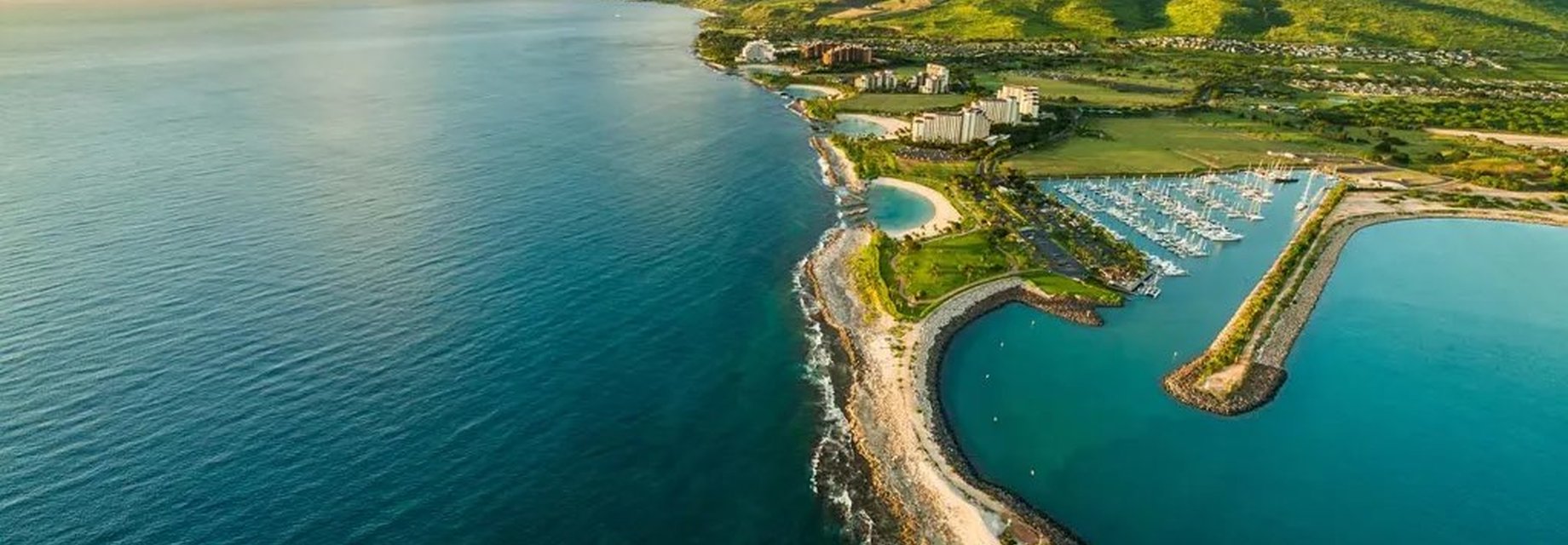
When I explain to people that Lu‘uLive is the ‘Surfline for diving’, they often ask: “why didn’t that already exist?” The answer is a combination of things. For years, surfers had live webcams and swell forecasts at their fingertips, but if you wanted to dive or snorkel, you were left guessing or trying to translate a surf report. The reality is that recreational ocean tech was built for a completely different sport, nearshore data was tough to gather, and putting cameras on our coastlines required a level of community trust that outside companies simply do not have.
Surfcams skipped the dive spots
Surfers and divers look for opposite conditions in the ocean. Surfers want breaking barrels and high waves, while divers look for flat, calm water and high viz (underwater visibility). Because surf spots and dive spots rarely overlap, Surfline had deliberately skipped sections of the coastline that were unpopular among surfers. Outside tech developers also assumed the diving community was too small to justify building dedicated tools. My research shows that there are 35 million surfers globally, and 7 million divers (not including snorkeling). Were corporations correct to follow the numbers? Maybe, but I believe that what divers lack in numbers is offset by enthusiasm for the underwater world!
Waves, crowds, and local trust
Putting cameras on the coast is as much about community as it is about technology. At a surf break, surfers usually wait in line to compete for a single main wave. When Surfline tried setting up cameras on East and West Oʻahu, local communities pushed back, worried that live feeds would overrun neighborhood spots with crowds and tourists. Conversely, divers in the same zone don’t directly compete with one another. Divers spread out across a reef, so crowd density is far less of a concern. Because Lu‘uLive is grassroots and Oʻahu-grown, we built direct relationships with private property owners to mount wireless cameras on their roofs. Growing through word-of-mouth helps us build trust in the community as a safety asset, where outside mainland companies were previously turned away.
Building what did not exist
When I started Lu‘uLive, off-the-shelf equipment could not do what we needed. Nearshore ocean data is sparse, and the dynamics of currents and viz are still tough to predict. I had to design self-sufficient camera setups powered by cellular data routers and solar panels, and mount them to trees and roofs.
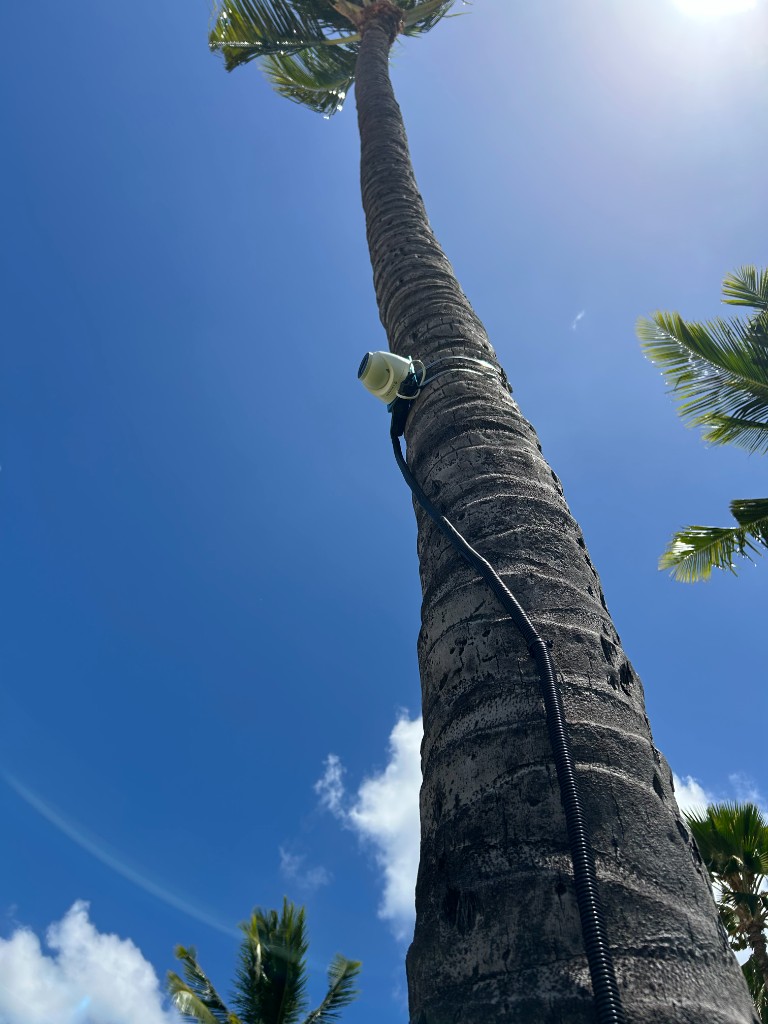 Surfcam mounted high up in a coconut tree near Ko Olina in West Oʻahu.
My team automated the ingestion of environmental inputs and translates them into a diveability score with simple terms like ‘good’, ‘fair’ or ‘NO GO’. To track underwater visibility without expensive sensors, I programmed a GoPro to take interval snapshots over a couple of weeks on a single battery charge, gathering the baseline imagery we need to train future predictive models. This is still a work in progress, we still have a ton of work to do!
With freediving growing, remote connectivity expanding, and data processing getting cheaper, the timing finally came together. Most importantly, nearshore awareness helps prevent snorkel and dive drownings by giving people a clear view of conditions before they pack their gear.
Related article: Why Lu‘uLive is the best site for monitoring dive conditions across Oʻahu