
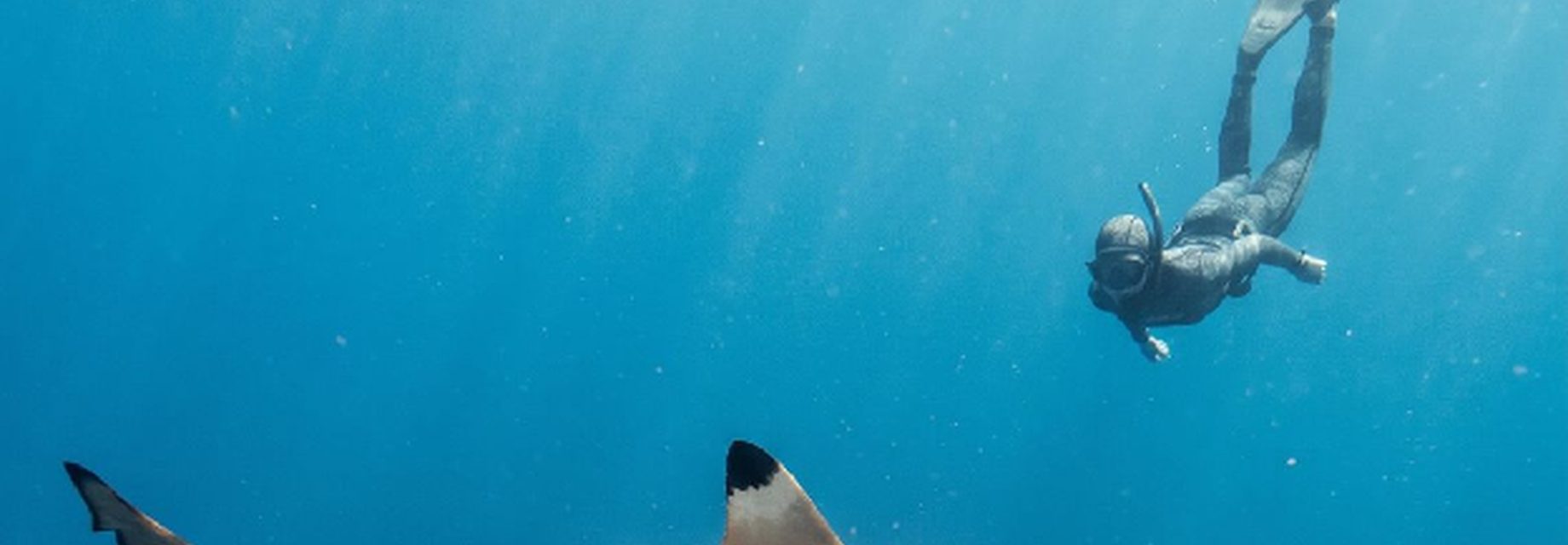
It’s generally understood that ocean activities come with risks, but perspective can really help us frame risk so that we lean into our adventurous spirit and experience life, without paralyzing ourselves from all the possibilities of what could go wrong. In my waterman career, I’ve probably had 20 separate shark sightings while in the ocean (not including the 30 or so Galápagos sharks I saw on a shark dive off North Oʻahu). Half of those sightings have been a fin poking above water while I was surfing. The other half have been underwater while diving. I can name many of those spots: Diamond Head, Cromwells, Point Panic, Sandy Beach, Tongs, Leftovers, and Turtle Canyon. When surfing, I typically see whitetip reef sharks or tiger sharks, but most of my sightings while diving have been whitetips, with the exception of one close encounter near the surface with a tiger shark while I had freshly caught fish attached to the kuʻi (stringer) on my weight belt. Thankfully, I lived to tell the tale… phew!
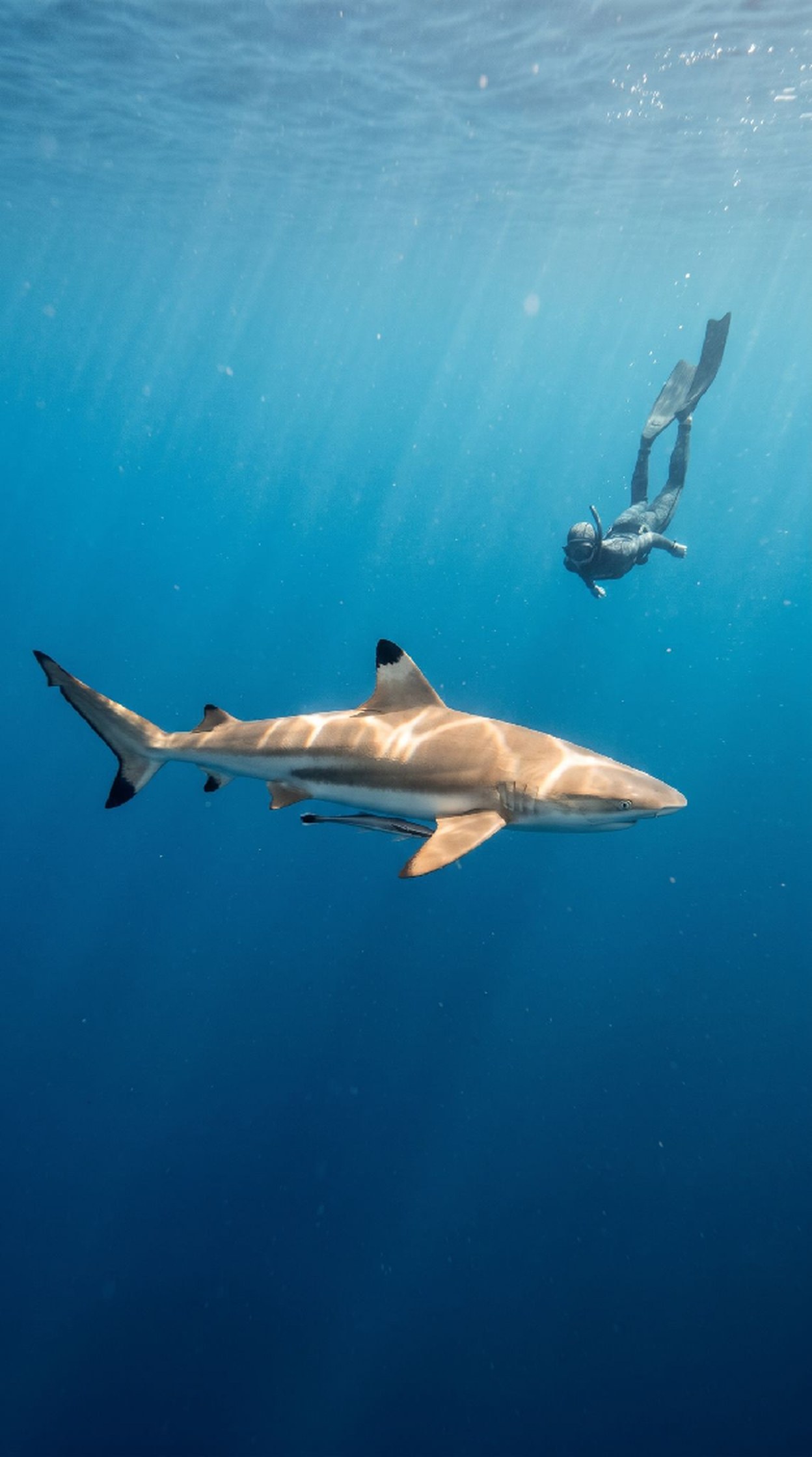 A calm underwater pass with sharks nearby. Perspective helps more than panic.
I’ve settled on two conclusions.
Sharks are everywhere in Hawaiʻi
The Pacific Islands Ocean Observing System (PacIOOS) ran a project to track tiger sharks. They successfully tagged dozens of tiger sharks in Hawaiʻi with GPS tags. When they surface, the GPS tag sends a ping of their coordinates to a program, which is plotted on a map. As you can see in the screenshot below, they are everywhere. So when someone says a place is “sharky,” I just roll my eyes.
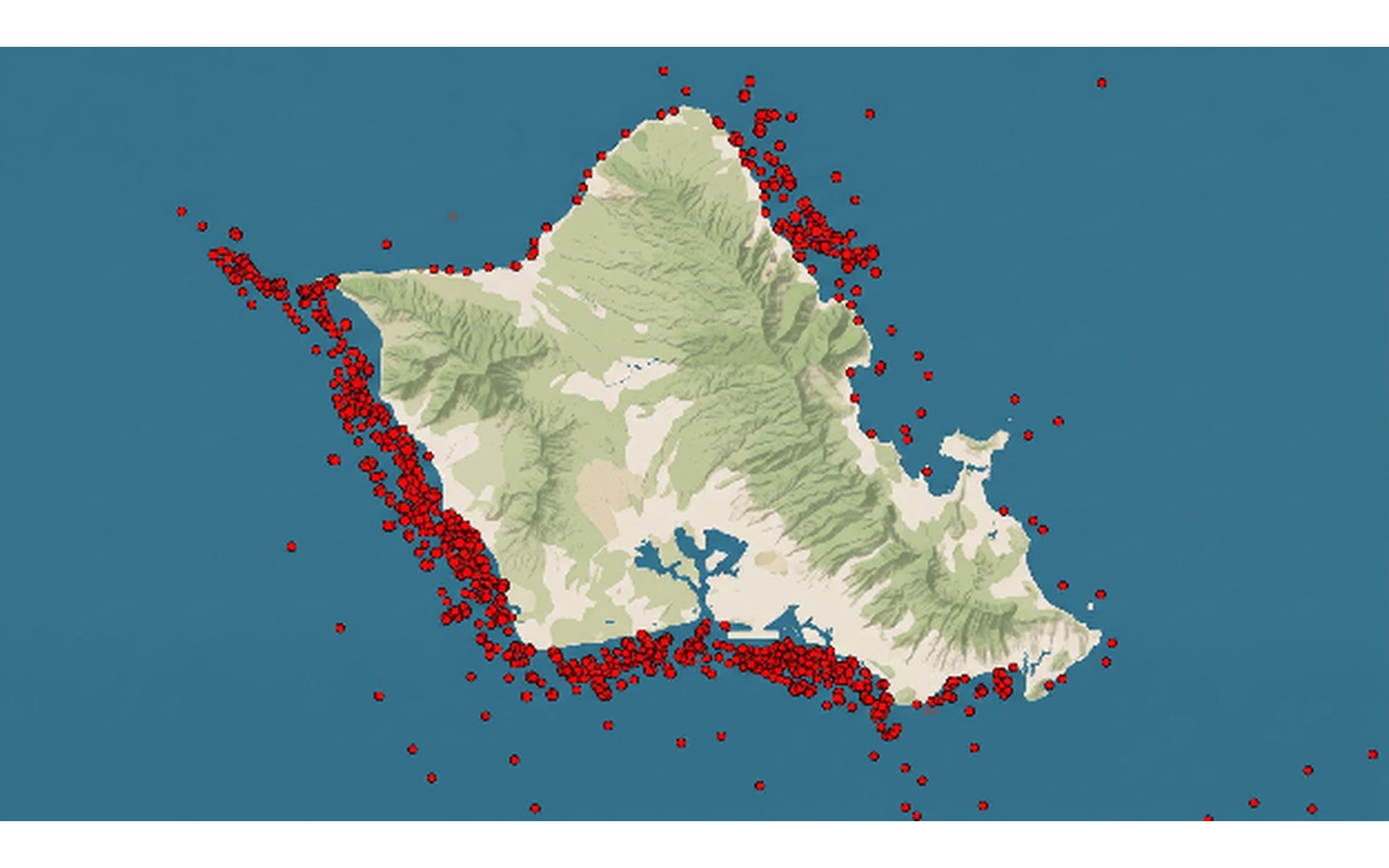 Shark position data from the PacIOOS study. Every red dot is where a tagged shark surfaced and transmitted its coordinates. This screenshot is only a partial slice of the data set, and still no coast looks sharkless.
Surfers face more risk than divers
I’ve never personally heard of a diver getting bitten by a shark in Hawaiʻi. I heard of an open-water swimmer getting attacked over 10 years ago, but that’s it. I hear about at least two to three shark incidents involving surfers per year. That lines up with what Hawaiʻi DLNR reports statewide: shark bites are rare, averaging about three or four incidents per year, and surfing shows up as the activity tied to the most incidents.¹
I suppose you could say that there are more surfers in the water than divers, so there is a higher probability of an incident happening to a surfer, but I think the surfer-shark vs. diver-shark dynamics are in favor of the diver, too. I have always imagined that surfers look like turtles when seen from below, so I assume many of those bites were mistakes on the shark’s part. Also, divers are much more aware of their underwater environment, so they can do some positioning that is helpful for self defense (although I wouldn’t want to rely on that!).
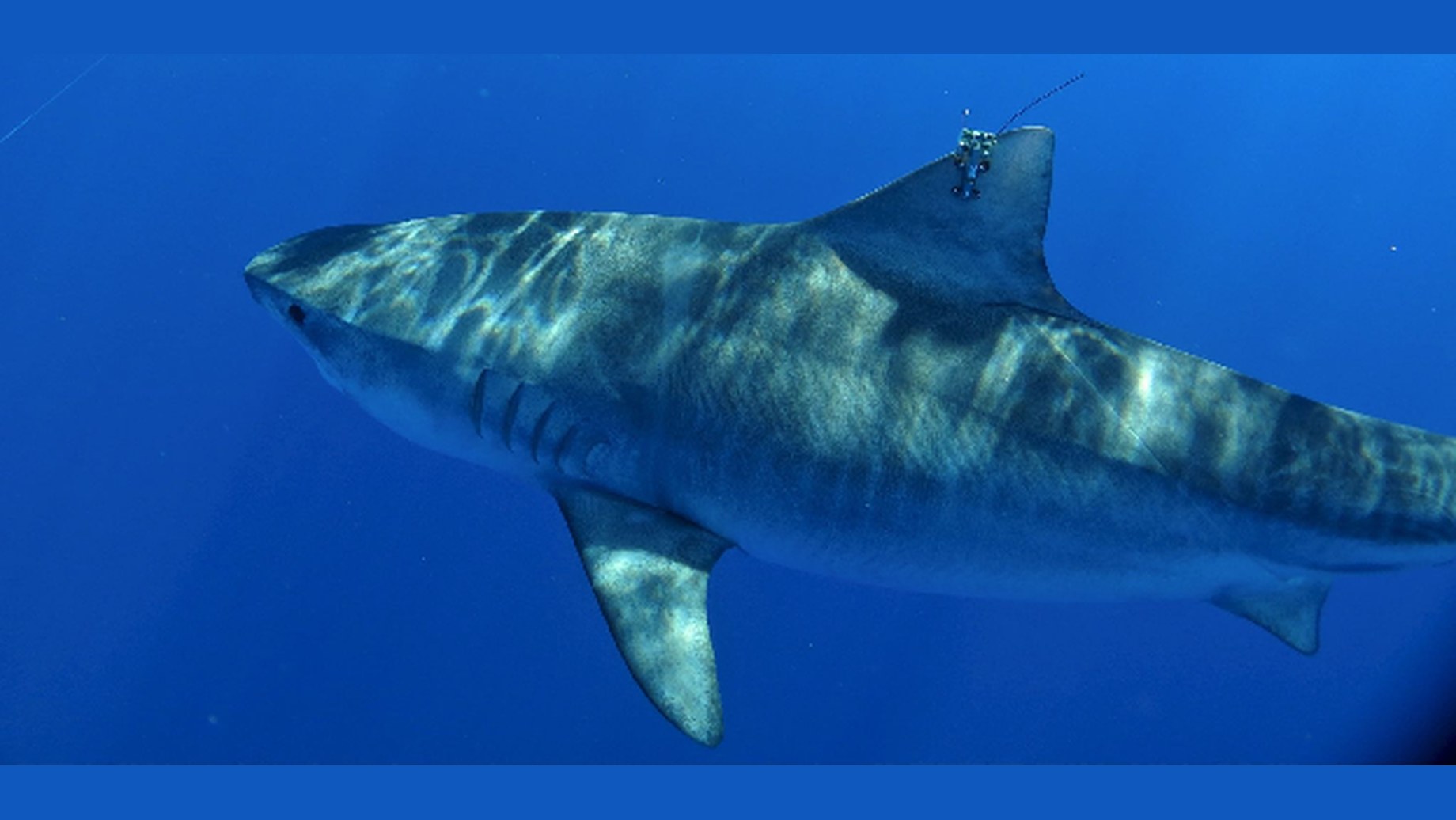 Tiger shark tagged with a GPS transmitter on the dorsal fin. Photo: Mark Royer.
Overall, I’ve spent a good portion of my life in the water, and I’ve never had any issues. From what I’ve heard about the demeanor of sharks in other areas, like great whites in Australia or aggressive sharks stealing fish from divers in Tahiti, it seems like the sharks in Hawaiʻi are relatively chill. For the most part, they seem to just be cruising around, napping under rocks, and minding their own business.
Don’t get me wrong, I am definitely paying full attention when I notice a shark in my area, and especially so when I am surfing, but I think Hawaiian sharks are generally cruisers and shouldn’t deter us from having fun in the water.
Notes
¹ At the time this article was written, this is the latest status from Hawaiʻi DLNR’s Hawaiʻi Sharks pages. For current incident data, safety tips, and activity breakdowns, see the fact sheet, incident graphs, and incident list. PacIOOS tiger shark tracking lives on their sharks project page.