
Uninvited Guests: Hawaii’s Invasive Reef Fish
When you dive into the nearshore Hawaiian waters, you'll encounter a delicate balance of native marine life. However, not all the fish you see belong there. In the 1950s, several fish species were intentionally introduced to Hawaii in an attempt to boost local commercial fisheries. Unfortunately, these "uninvited guests" thrived a little too well, often outcompeting, displacing, or directly preying on native species.
This guide covers the main invasive fish on the reef. You'll learn how to spot them, understand their impact on the ecosystem, and discover why local spearfishers and anglers are highly encouraged to harvest them to help protect the reef.
Ta'ape / Bluestripe Snapper
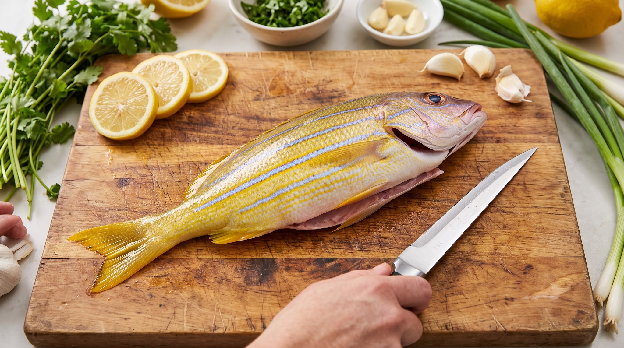
Ecological Role & Biology: Introduced to Hawaii from the Marquesas Islands, the Ta'ape is easy to spot with its bright yellow body and four neon blue stripes. They form massive, dense schools hovering over coral structures and wrecks. Ta'ape aggressively outcompete native bottom-feeders (like goatfish) for food and living space. Because they reproduce rapidly and lack sufficient natural predators in Hawaii, their population has exploded across the islands.
Flavor: ★★★★☆
Culinary Annotations: State wildlife officials strongly encourage the open harvest of Ta'ape to help manage their numbers and relieve pressure on the reef. Fortunately, they are excellent eating! The fish yields sweet, flaky white meat that is traditionally scored and deep-fried whole until crispy, or pan-seared.
To'au / Blacktail Snapper
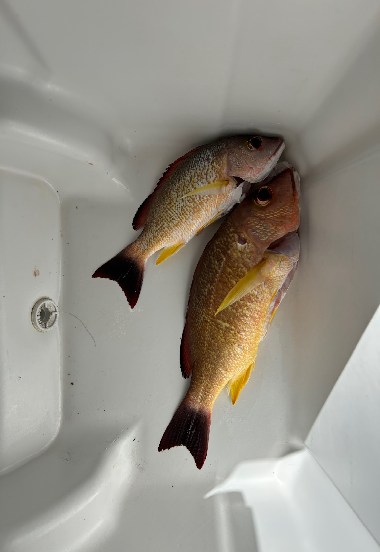
Ecological Role & Biology: Another intentional introduction, the To'au is a shallow-water snapper with a silvery-pink body and distinctive reddish-black tail fins. They are aggressive predators that like to hide under shallow ledges, in caves, and in protected bays, feeding heavily on native crustaceans and juvenile reef fish.
Flavor: ★★★☆☆
Culinary Annotations: Like the Ta'ape, harvesting To'au is an "open season" free-for-all that greatly benefits the local ecosystem. The meat is mild, firm, and flaky. Because the fillets hold together very well when cooked, To'au is a favorite local choice for grilling, baking, or slicing into chunks for fresh fish tacos.
Roi / Peacock Grouper
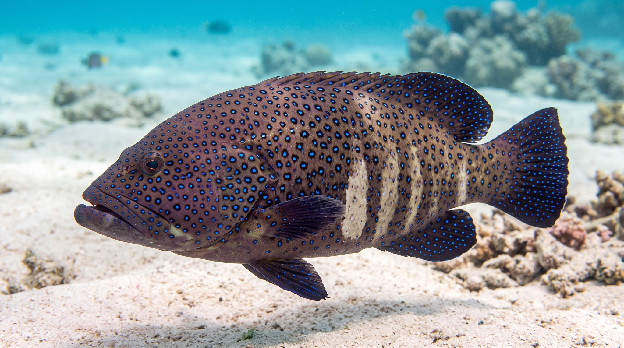
Ecological Role & Biology: Covered in brilliant blue spots over a dark brown body, the Roi is a highly destructive apex predator. Introduced to Hawaii from French Polynesia, this peacock grouper has decimated native reef fish populations by aggressively preying on smaller species and taking over prime reef habitat. Removing them is considered a critical step in native fish recovery.
Flavor: ★★★☆☆ (⚠️risk of Ciguatera poisoning)
Harvesting & Safety: While Roi is highly targeted by local spearfishers specifically for removal—often in organized "Roi Roundup" tournaments designed to cull their numbers—it is unsafe to eat. In Hawaii, Roi carry a very high risk of Ciguatera fish poisoning, a severe neurological and gastrointestinal illness caused by toxins that build up in the flesh of reef predators. When speared or caught, they should be permanently removed from the ecosystem and are often used as fertilizer for fruit trees rather than food.