
The Peaceful Plant-Eaters
When you dive into the nearshore Hawaiian waters, you enter an active marine ecosystem, populated by the full range of the food chain. Predators often get the spotlight, however, plant-eaters do the heavy lifting on the reef. These herbivores—ranging from sea turtles to colorful fish—graze on algae and seaweed all day. By keeping plant growth under control, they prevent coral from getting smothered and keep the reef healthy.
This guide covers the main grazers on the reef. You'll learn how to spot them, what they do for the ecosystem, and which ones locals harvest for food.
Honu / Green Sea Turtle
Flavor: Endangered! Do not eat.
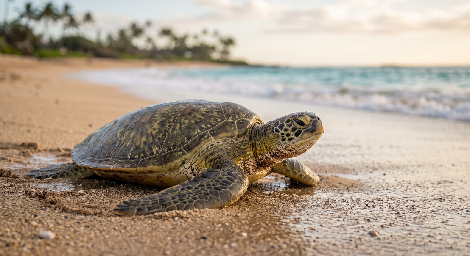
Ecological Role & Biology: The Honu holds a special place in Hawaiian culture as an 'aumakua (ancestral spirit guide). Adult Green Sea Turtles eat a diet of seaweed (limu) and seagrass. They use serrated jaws to tear vegetation off rocks. By trimming seagrass beds, they help keep the plants healthy and growing.
Snorkeling Encounters: You'll often find Honu resting under reef ledges, in lava tubes, or hanging out at cleaning stations where small fish pick parasites off their shells. Give them plenty of space when you see them.
Legal Status & Regulations: Honu are classified as endangered and are fully protected under the Endangered Species Act and Hawaii state and federal law. It is illegal to touch, harass, feed, chase, or ride them. Viewers should maintain a recommended minimum distance of at least 10 feet (3 meters) on land and in the water. Violations can result in fines or imprisonment.
Uhu / Parrotfish
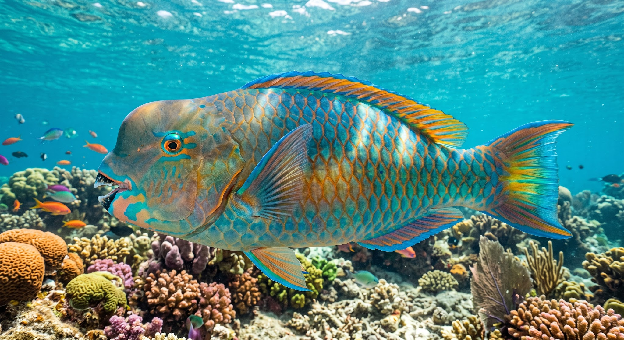
Ecological Role & Biology: Uhu keep the reef clean. Named for their beak-like teeth, they scrape algae directly off coral. In the process, they swallow pieces of dead coral, digest it, and pass it out as white sand. A single parrotfish can create hundreds of pounds of sand each year. As they grow, many parrotfish also change sex from female to male, changing colors in the process.
Flavor: ★★★★★
Culinary Annotations: Uhu is a popular catch for local spearfishers. The meat is white, mild, and flaky. A common preparation is steaming the fish whole with ginger, scallions, and soy sauce, then pouring hot oil over top to crisp the skin.
Kala / Bluespine Unicornfish
Surgeonfish get their name from the sharp spines at the base of their tail, which they use for defense. They are active grazers that keep turf algae under control.
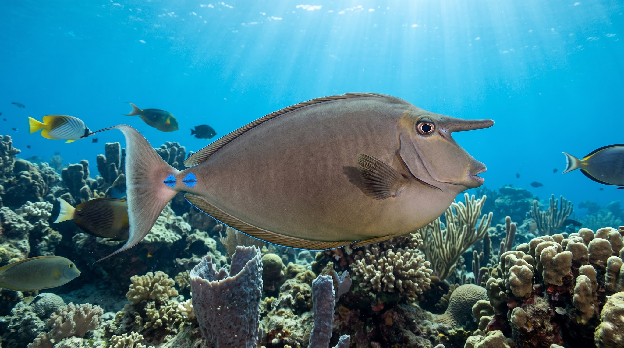
Ecological Role & Biology: You can spot Kala by the horn on their forehead. They live around shallow reefs and surge zones, feeding on tough macroalgae like Sargassum that other fish avoid. They also have two sharp blue spines on each side of their tail. The Kala can live up to 55 years in the wild!
Flavor: ★★★★☆
Culinary Annotations: Kala is a traditional food source in Hawaii. It has a stronger flavor and thick skin, so it isn't usually eaten raw. Instead, people typically smoke or dry the meat.
Palani / Eyestripe Surgeonfish
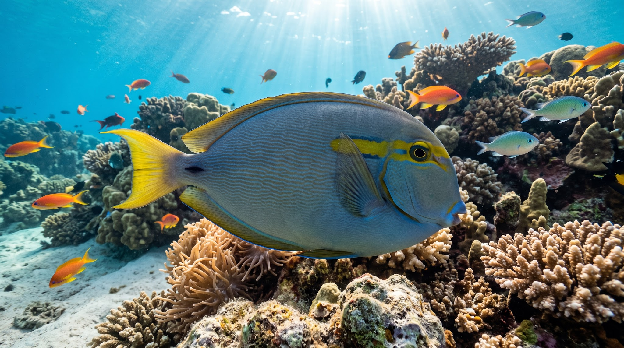
Ecological Role & Biology: Palani have a yellow band near their eyes and blue stripes along their body. They feed on turf algae that grows over rocks and dead coral, clearing space for new coral to grow.
Flavor: ★★☆☆☆
Culinary Annotations: Palani can be eaten, but it has a strong smell from its digestive tract. Fishermen clean and gut the fish immediately after catching it to protect the meat's flavor. When prepared properly, it holds up well on the grill.